
Studies: CHIOS MASTIC IN SKIN CARE
In short: Chios mastic has a long history in skin care. In the 19th century, French pharmacopoeias listed it for skin preparations, and its adhesive nature led to use in surgical dressings and wound adhesives. This page summarises published research on mastic in skin care, with citations.
Selected studies
Adhesive strength (Mikhail et al., 1986)
Compared the adhesive power of a compound tincture of benzoin (CTB) with a mastic-based preparation (Mastisol, an alcohol solution of a mastic compound). Mastisol provided notably stronger adhesion than CTB.
Adhesion with surgical strips (Mikhail et al., 1989)
Tested Mastisol with and without 0.5-inch Steri-Strips. The combination gave the strongest adhesion (at a tension of about 2.2 psi) — useful for anchoring surgical dressings in place.
Postoperative wound adhesives (Lesesne, 1992)
Compared mastic with benzoin (USP) for postoperative wound adhesion. Mastic offered superior adhesive qualities and a lower incidence of postoperative contact dermatitis and skin discoloration.
Activity against skin fungi (Ali-Shtayeh & Abu Ghdeib, 1999)
Tested mastic among many plant extracts against dermatophytes (Microsporum canis, Trichophyton mentagrophytes, Trichophyton violaceum); mastic inhibited all three by 90–100% in vitro.
Skin irritation after epilation/peeling (Protopapa et al., 2001)
Investigated mastic essential oil in skin after epilation or peeling. Creams containing the oil reduced the time needed to relieve irritation compared with a placebo cream.
Wound-closure strips (Yavuzer et al., 2005)
Studied the burst strength of suture closure versus sutures plus strips. Strip reinforcement (with or without mastic) did not add strength to the sutures, but mastic improved strip adherence — useful when strips alone closed a wound.
What the research suggests
Across these studies, Chios mastic is valued mainly for its strong adhesive properties in medical strips and dressings, with some research also reporting activity against skin fungi and a reduction in skin irritation after epilation or peeling. These are research findings, often in clinical or laboratory settings — not claims about a cosmetic or food product.

References
- Mikhail G.R., Selak L., Salo S. (1986). Reinforcement of surgical adhesive strips. J Dermatol Surg Oncol., 12(9): 904–905, 908.
- Mikhail G.R., Selak L., Salo S., Balle M.R. (1989). The efficacy of adhesives in the application of wound dressings. J Burn Care Rehabil., 10(3): 216–219.
- Lesesne C.B. (1992). The postoperative use of wound adhesives. Gum mastic versus benzoin, USP. J Dermatol Surg Oncol., 18(11): 990.
- Ali-Shtayeh M.S., Abu Ghdeib S.I. (1999). Antifungal activity of plant extracts against dermatophytes. Mycoses, 42: 665–672.
- Protopapa E.E. et al. (2001). The antiphlogistic action of the Chios mastic essential oil… Epitheorese Klinikes Farmakologias kai Farmakokinetikes, Int. Ed., 16: 203–205.
- Yavuzer R. et al. (2005). Reinforcement of subcuticular continuous suture closure with surgical adhesive strips and gum mastic. Am J Surg., 189(3): 315–318.
Continue reading
Discover mastic for your skin-care routine.
Mastic for your gastrointestinal tract
-
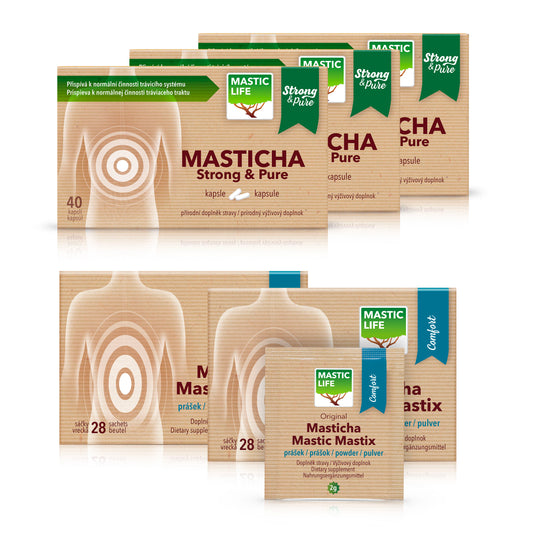 8-week treatment 🗓️
Mastic 8 weeks
Regular price $90.00 USDRegular price$112.00 USDSale price $90.00 USDSale -
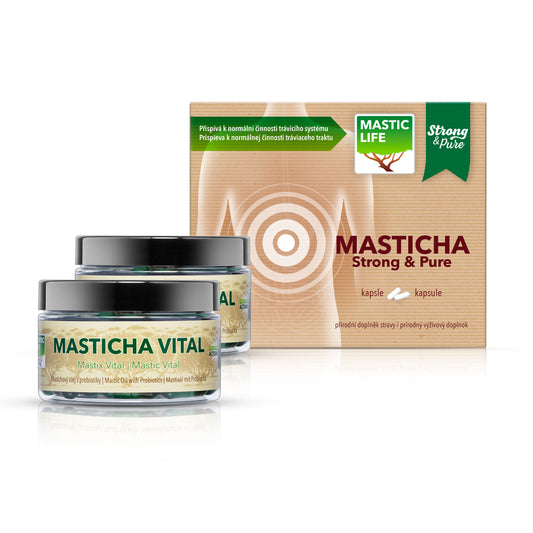 60-day treatment 💪
Mastic Gum Extra for 60 days
Regular price $152.00 USDRegular price$189.00 USDSale price $152.00 USDSale -
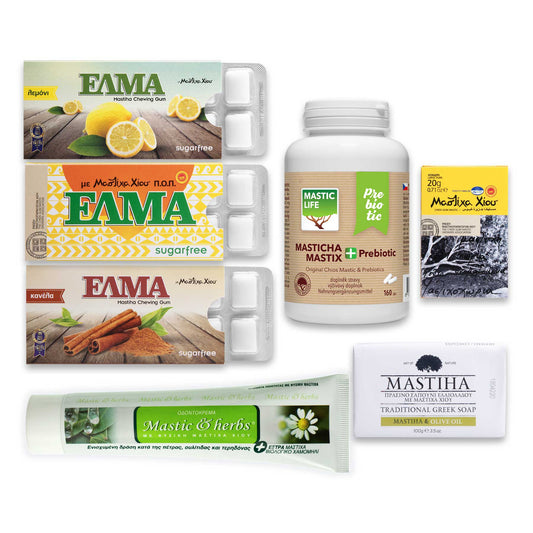 Gift set 🎁
Mastic „Life with Mastic"
Regular price $72.00 USDRegular price$82.00 USDSale price $72.00 USDSale -
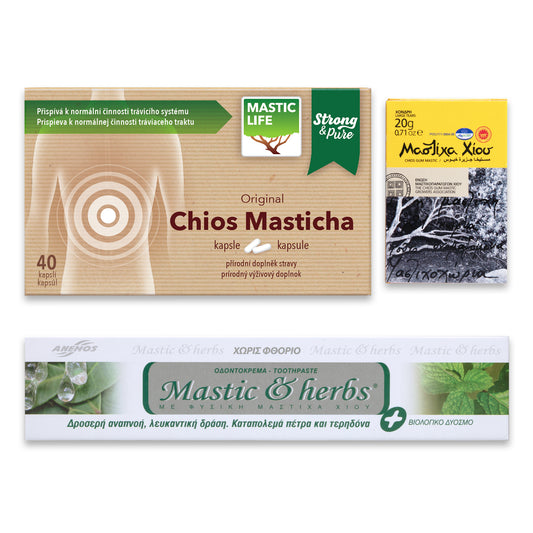 Gift set 🌿
Mastic „Pure Mastic“
Regular price $37.00 USDRegular price$40.00 USDSale price $37.00 USDSale
