
Mastic Gum Stuck to Your Teeth – What to Do
In short: Mastic gum can stick to your teeth, especially in the first few minutes before it softens — most often with softer or more moist pieces. This is not a defect; it is a natural property of pure resin. There are several reliable ways to remove it, and — more importantly — a simple technique to prevent it from happening again.
In this article
Why mastic gum sticks to teeth
Mastic is a 100% natural resin — not a processed chewing gum. Every piece behaves differently depending on its size, moisture content and temperature.
Softer, more moist pieces are the most likely to stick. Larger tears retain more moisture and are more susceptible to spreading before they warm up and form a cohesive mass. If you start chewing before the resin has softened, it can break apart into small fragments that adhere to enamel or lodge between teeth.
Stickiness is not a product defect — it is a sign of fresh, high-quality mastic.

- Softer or more moist pieces — they spread before warming up
- Chewing too quickly before the piece has had time to soften
- Warm storage conditions — resin softens and becomes sticky before you even start chewing
How to remove mastic gum from teeth
Try whichever method is most convenient for you.
Add a harder piece and keep chewing
The simplest and most effective method. Mastic sticks to mastic — press a harder piece against the affected area and chew slowly. The loose fragments will bind to the new piece and come away with it. This method is recommended by mastic producers worldwide.
Olive oil or coconut oil
Apply a small amount of olive or coconut oil directly to the affected teeth. Leave it for 1–2 minutes — the oil breaks down the adhesion between the resin and enamel. Then brush gently with a soft toothbrush. Both oils are safe for enamel and gums.
Warm water
Mastic softens with heat. Rinse your mouth with warm (not hot) water and hold it for a moment — the resin will become more pliable. Then gently work the softened piece loose with your tongue or a soft toothbrush. Best used alongside another method.
Dental floss
If mastic has lodged between teeth, use dental floss. Guide it slowly and without snapping — once softened, the resin is elastic and the floss will gradually work it free. Combine with warm water for better results.
- Sharp objects (toothpick, fingernail, metal tool) — risk of chipping enamel
- Alcohol-based mouthwash applied directly to enamel — can irritate oral tissues
- Boiling or very hot water — risk of burning gums
How to prevent it: correct technique
Mastic sticking to teeth is almost always avoidable with one simple change in technique.
Hold the piece in your mouth for 15–30 seconds before chewing. The warmth and saliva begin softening the resin before the first bite. Then chew slowly and gently with your front teeth until it forms a single cohesive mass.
Pair a softer piece with a harder one. The harder piece neutralises the stickiness of the softer one — they combine and stop clinging to teeth.
Drink a glass of water before chewing. Moisture in the mouth speeds up softening and reduces the risk of sticking.
Store mastic below 18 °C. Heat softens the resin before you even start chewing, making it stickier. A cool, dry place — or the fridge for long-term storage — keeps the tears firm and easier to handle.
For the full chewing guide, see how to chew raw mastic gum.
FAQ
Is mastic gum sticking to teeth normal?
Yes. Mastic is a natural resin — every piece is different. Stickiness is a sign of fresh, high-quality mastic, not a product defect. It is easily avoided with the right technique and by pairing pieces of different hardness.
Can mastic gum damage tooth enamel?
Mastic itself does not damage enamel. The risk of mechanical damage arises only if you try to scrape the resin off with sharp objects or force.
Which removal method works fastest?
Adding a harder piece and continuing to chew — it works immediately. If you don't have more mastic to hand, olive or coconut oil (1–2 minutes, then gentle brushing) is the most reliable alternative.
What if mastic sticks to a crown or dental restoration?
People with crowns, bridges or other dental work should be careful when chewing mastic generally. To remove any stuck resin, use olive oil — do not apply pressure and avoid using dental floss aggressively. If in doubt, consult your dentist.
Continue reading
Mastic for your gastrointestinal tract
-
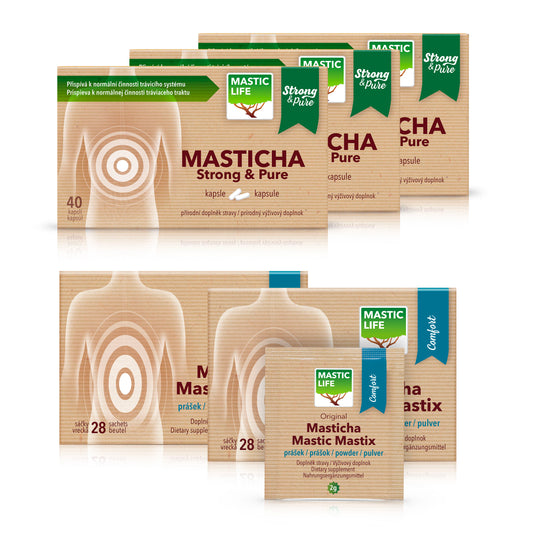 8-week treatment 🗓️
Mastic 8 weeks
Regular price $91.00 USDRegular price$113.00 USDSale price $91.00 USDSale -
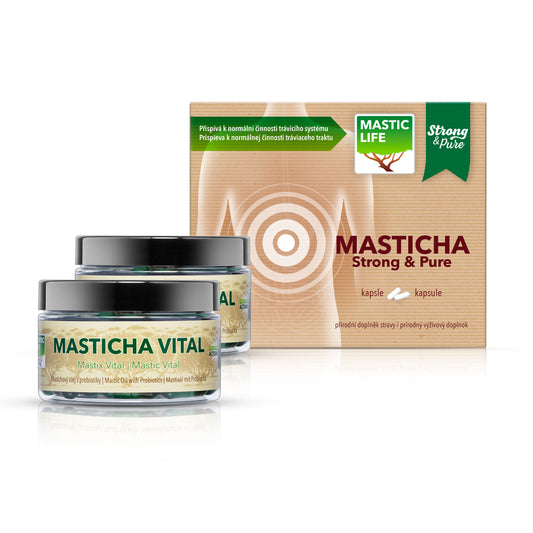 60-day treatment 💪
Mastic Gum Extra for 60 days
Regular price $153.00 USDRegular price$191.00 USDSale price $153.00 USDSale -
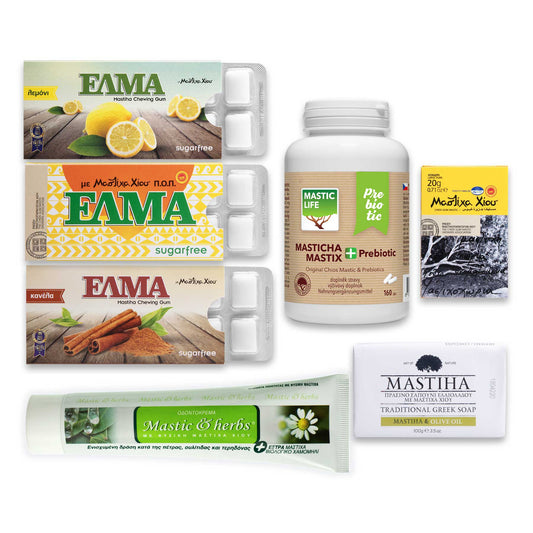 Gift set 🎁
Mastic „Life with Mastic"
Regular price $73.00 USDRegular price$83.00 USDSale price $73.00 USDSale -
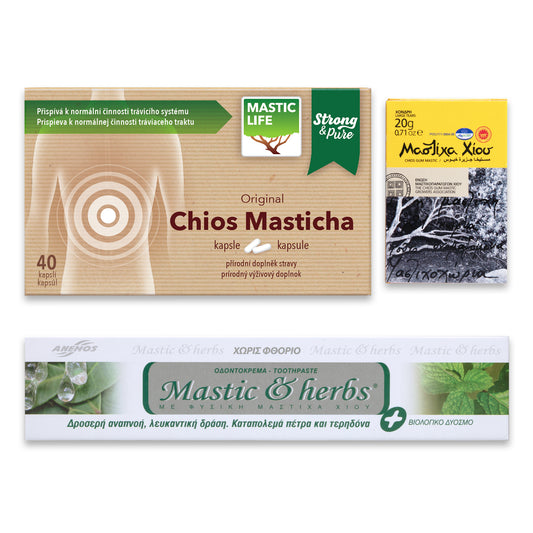 Gift set 🌿
Mastic „Pure Mastic“
Regular price $37.00 USDRegular price$40.00 USDSale price $37.00 USDSale
