
Helicobacter Pylori
About Helicobacter pylori
Helicobacter pylori (H. pylori) is a common stomach bacterium and a frequent cause of ulcers and gastritis. It is a medical condition diagnosed and managed by a doctor. The information below is for information only.
In short: Helicobacter pylori (H. pylori) is a bacterium that infects the stomach lining. Many people carry it without ever feeling ill, but in others it can cause ulcers and gastritis and, over time, raise the risk of stomach cancer. If you have ongoing stomach symptoms, a doctor can test for it and, if needed, treat it with antibiotics.
Written by Zuzka, Masticlife content team · Last updated September 8, 2026
In this article
What is Helicobacter pylori?

Helicobacter pylori (often shortened to H. pylori or HP) is a gram-negative, rod- to spiral-shaped bacterium that can live in both human and animal organisms. It is one of the most common chronic infections in the world and may be present in more than half of the global population. It is also the most common cause of stomach and duodenal ulcers.
Most people never know they carry it, because they never feel ill. In others it can cause problems in the digestive system — most commonly stomach pain and nausea. If you have signs and symptoms of a stomach ulcer, your doctor will likely test you for H. pylori, and if the infection is confirmed it can be treated with antibiotics.
What does Helicobacter pylori look like?
H. pylori is a gram-negative organism with a spiral shape and 6–8 flagella at one end. It measures roughly 2–4 μm × 0.5–1 μm. The flagella let it burrow into the protective mucus layer of the stomach, which is how it survives where most bacteria cannot.
It was first described in 1983 by Robin Warren and Barry Marshall, who established the link between H. pylori and the development of gastric and duodenal ulcers — work that later earned them the Nobel Prize.
Where is Helicobacter pylori found?
H. pylori lives in the human stomach (and sometimes in animals), infecting the stomach lining and upper gastrointestinal tract. It can exist in a very acidic environment, at pH 2.0 or lower. The biggest health complications are associated with infection of the stomach lining: long-term infection can lead to chronic inflammation, and the World Health Organization classifies H. pylori as a risk factor for stomach cancer.
Symptoms of Helicobacter pylori infection
Many people have no symptoms at all. When symptoms do occur, they may include:
- heartburn
- nausea
- stomach pain
- pressure in the stomach
- vomiting
- diarrhoea
- bad breath
- upper abdomen pain
- loss of appetite
When to see a doctor
Make an appointment with your doctor if you have persistent signs and symptoms that worry you. Get medical help right away if you notice:
Important — seek prompt medical care for:
- severe or persistent abdominal pain
- bloody or black vomit, or vomit that looks like coffee grounds
- black, bloody or tarry stools
- difficulty swallowing
What does H. pylori look like in stool?
H. pylori itself is microscopic — you can't see the bacterium in stool. On its own, an H. pylori infection doesn't give stool a distinctive look or smell. If it has caused a bleeding ulcer, though, stool can turn black and tarry — that's a warning sign needing prompt medical attention, not something to self-diagnose from appearance alone.
The reliable way to confirm H. pylori is a proper test, not the look of your stool — see our testing guide.
What happens if H. pylori goes untreated
If H. pylori infection is left untreated, the stomach lining can be progressively damaged. Possible complications include:
- stomach ulcers
- inflammation of the stomach lining
- gastritis
Long-standing infection is also a recognised risk factor for certain types of stomach cancer, which is why persistent symptoms should be assessed by a doctor.
How H. pylori is transmitted
H. pylori spreads from person to person, mainly via the fecal–oral route — for example through contaminated food or water, or close contact. Infection often begins in childhood, while problems and symptoms frequently appear only in adulthood.
Helicobacter pylori testing
If you think you may have an infection, contact your doctor. Common test types include:
- serum, urine or saliva sample — antibodies against H. pylori
- stool sample — detection of H. pylori antigen
- urea breath test
- home test kit (stool or blood)
Home test kits are a simple way to check for infection. They are easy to use, suitable for almost all age groups, and offer high reliability. They are a convenient first step before discussing the result with your doctor.
Want to test at home?
Compare the stool antigen and blood antibody home tests, and see step by step how testing works.
See the full testing guideTesting: If you suspect an infection, the practical step is to test and see your doctor. See all options in the Helicobacter pylori tests collection and discuss the result with your physician.
Treatment for Helicobacter pylori
If your test is positive, you should start treatment under medical guidance. Your doctor will evaluate your health and the infection, then decide on the right approach. Treatment usually involves a combination of several antibiotics, often together with a medicine that reduces stomach acid (a proton-pump inhibitor), to help the antibiotics work.
Treatment lasts at least one week, but is typically around one to three weeks. Afterwards, a follow-up test or a stomach-lining sample may be taken to confirm the bacterium has been eradicated. H. pylori is a medical condition — diagnosis and treatment should always be guided by a doctor.
A 1998 letter published in the New England Journal of Medicine is sometimes mentioned in connection with mastic gum and H. pylori — it described a laboratory (in vitro) finding, not a clinical treatment result. A lab finding on its own doesn't establish an effect in the body, so mastic gum isn't a substitute for the antibiotic treatment your doctor may prescribe.
FAQ: Helicobacter pylori
What is Helicobacter pylori?
Helicobacter pylori (H. pylori) is a gram-negative, spiral-shaped bacterium that lives in the stomach. It is very common worldwide. Many people have no symptoms, but it can cause stomach pain, nausea, ulcers and gastritis.
What does Helicobacter pylori look like?
It is a gram-negative organism with a spiral shape and 6–8 flagella at one end, measuring about 2–4 μm × 0.5–1 μm.
Where is Helicobacter pylori found?
It lives in the human stomach and sometimes in animals, infecting the stomach lining and upper gastrointestinal tract, and survives in very acidic conditions (pH 2.0 or lower).
What are the symptoms of Helicobacter pylori infection?
Possible symptoms include heartburn, nausea, stomach pain, pressure in the stomach, vomiting, diarrhoea, bad breath, upper-abdominal pain and loss of appetite. Many people have no symptoms at all.
When should you see a doctor?
See a doctor for persistent or severe abdominal pain, bloody or black vomit, black/bloody/tarry stools, or difficulty swallowing. Repeated symptoms may warrant H. pylori testing.
How is Helicobacter pylori transmitted?
It spreads from person to person, mainly via the fecal–oral route, and infection often begins in childhood.
How is Helicobacter pylori tested?
Tests include antibody tests from serum, urine or saliva, a stool antigen test, a urea breath test, and home test kits. Discuss results with your doctor.
What is the treatment for Helicobacter pylori?
Treatment is decided by a doctor and usually involves a combination of antibiotics for one to three weeks, followed by a check to confirm the infection has cleared.
What does H. pylori look like in stool?
You can't see the bacterium itself — H. pylori doesn't give stool a distinctive look on its own. Black, tarry stool can signal a bleeding ulcer it caused, and needs urgent medical attention.
Mastic for your gastrointestinal tract
-
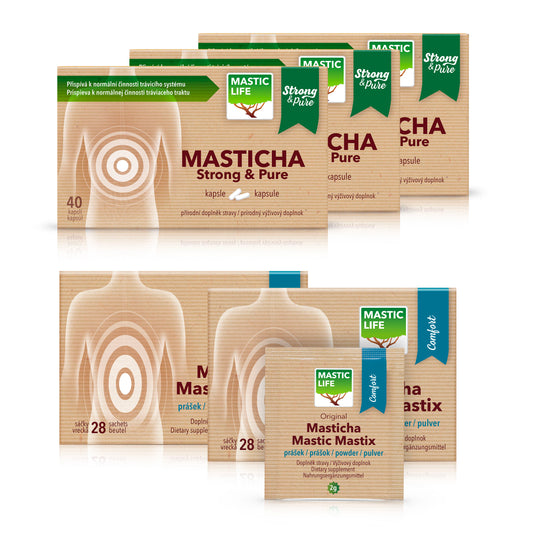 8-week treatment 🗓️
Mastic 8 weeks
Regular price $89.00 USDRegular price$111.00 USDSale price $89.00 USDSale -
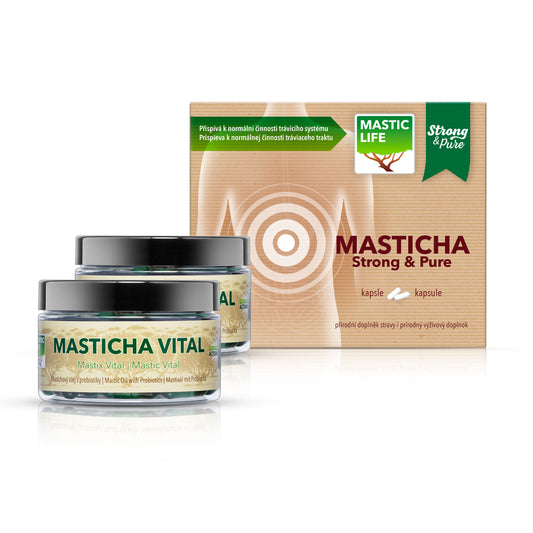 60-day treatment 💪
Mastic Gum Extra for 60 days
Regular price $150.00 USDRegular price$188.00 USDSale price $150.00 USDSale -
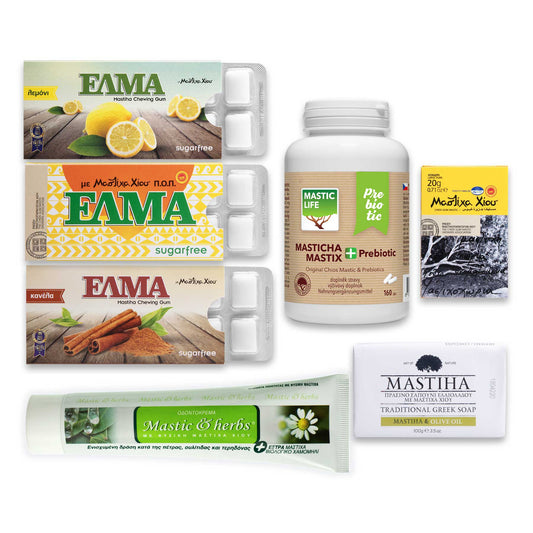 Gift set 🎁
Mastic „Life with Mastic"
Regular price $72.00 USDRegular price$82.00 USDSale price $72.00 USDSale -
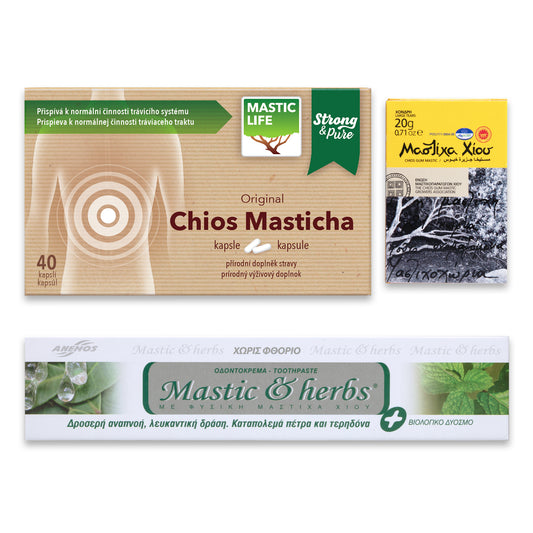 Gift set 🌿
Mastic „Pure Mastic“
Regular price $36.00 USDRegular price$39.00 USDSale price $36.00 USDSale
