
How Do You Know If You Have Helicobacter Pylori?
About Helicobacter pylori
Helicobacter pylori is a stomach bacterium that can cause ulcers and gastritis. It is a medical condition diagnosed and managed by a doctor. The information below is for information only.
In short: Helicobacter pylori is a bacterium that can cause stomach ulcers and inflammation. Not everyone infected shows visible symptoms, but early detection helps prevent chronic problems. A home test or your doctor can confirm whether you have it.
What is H. pylori infection?
Helicobacter pylori (H. pylori) is a bacterium that colonizes the stomach or duodenum. It is the most common cause of peptic ulcer disease and chronic gastritis. If left untreated, persistent irritation of the stomach lining can lead to more serious health complications.

Symptoms and causes
How does H. pylori damage the stomach?
The bacteria live in the protective mucus layer of the stomach lining. They produce an enzyme called urease, which neutralizes stomach acid by converting urea into ammonia. This lets the bacteria survive in the harsh acidic environment, where they gradually weaken the stomach tissue.
Common symptoms of infection
Many people are asymptomatic, but when symptoms occur they often mimic gastritis or ulcers:
- Dull or burning stomach pain (often worse at night or when the stomach is empty)
- unplanned weight loss and loss of appetite
- frequent bloating and belching
- nausea or indigestion (dyspepsia)
- in severe cases: blood in the stool or bloody vomit
Suspecting an infection?
See how a home stool or blood test works, and which one fits your situation.
Test at home: step-by-step guideDiagnostics and professional help
If you prefer a clinical diagnosis, your doctor may perform a breath test, stool test, blood test, or a gastroscopy (endoscopy). If H. pylori is confirmed, treatment usually involves a combination of antibiotics and proton-pump inhibitors, decided and supervised by your doctor.
Helicobacter pylori at a glance
FAQ: How to tell if you have H. pylori
What are the first signs of H. pylori?
Common symptoms include dull or burning stomach pain, bloating, belching and nausea. Many people remain asymptomatic for years.
Can I test for Helicobacter at home?
Yes. Home test kits (stool or blood) give reliable results within about 10 minutes in the privacy of your home. Discuss the result with your doctor.
How does H. pylori damage the stomach?
It lives in the stomach's mucus layer and produces urease, which neutralizes stomach acid so the bacteria can survive and gradually weaken the stomach lining.
How is H. pylori diagnosed by a doctor?
A doctor may use a breath test, stool test, blood test or gastroscopy. If confirmed, treatment usually combines antibiotics with a proton-pump inhibitor.
Mastic for your gastrointestinal tract
-
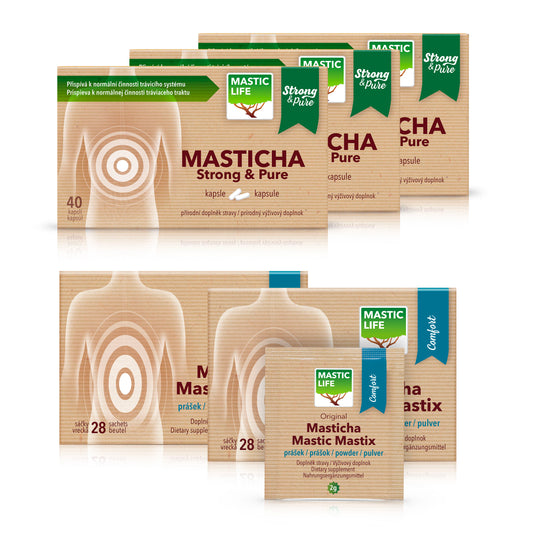 8-week treatment 🗓️
Mastic 8 weeks
Regular price 29.000 HUFRegular price36.200 HUFSale price 29.000 HUFSale -
 60-day treatment 💪
Mastic Gum Extra for 60 days
Regular price 48.900 HUFRegular price61.100 HUFSale price 48.900 HUFSale -
 Gift set 🎁
Mastic „Life with Mastic"
Regular price 23.300 HUFRegular price26.500 HUFSale price 23.300 HUFSale -
 Gift set 🌿
Mastic „Pure Mastic“
Regular price 11.700 HUFRegular price12.700 HUFSale price 11.700 HUFSale
