
Studies: ANTI-HYPERTENSIVE ACTIVITY OF CHIOS MASTIC
In short: Two 2018 studies — one in animals and one a small human study — investigated whether Chios mastic affects blood pressure, building on earlier research into its antioxidant and anti-inflammatory activity. This page summarises that research, with citations.
Study 1 — Tzani et al. (2018), animal study
In renovascular hypertensive rats, Chios mastic at 40 mg/kg of body weight per day for 2 weeks was associated with improvements in the structure of the aorta, a reversal of small-vessel hypertrophy in the heart, maintenance of serum albumin, and reductions in the inflammatory markers CRP and IL-6. The blood-pressure changes were associated with reduced renin and lower inflammation.
Study 2 — Kontogiannis et al. (2018), human study
A small randomized, double-blind, placebo-controlled crossover study assessed the acute effects of a single 2800 mg oral dose (four 700 mg tablets) of mastic versus placebo, with haemodynamics measured at baseline, 2 and 3 hours afterwards. In the hypertensive participants, the authors reported acute decreases in peripheral and aortic systolic blood pressure and in peripheral pulse pressure, while no significant changes occurred in participants with normal blood pressure. Gene-expression analysis pointed to downregulation of the proteasome system and the NOX2 pro-oxidant pathway.
The authors noted that the size of the blood-pressure change matched effect sizes seen with first-line anti-hypertensive medicines, and suggested mastic might have clinical relevance in hypertension. It’s important to read this in context: it was a single-dose, short-term study in a small group — not evidence that a food supplement can manage blood pressure, and not a reason to change any treatment.

What the research suggests
Two 2018 studies — one in rats and one a small, short-term human study — reported blood-pressure-related effects of Chios mastic, possibly linked to its antioxidant and anti-inflammatory activity. This is early research that needs confirmation in larger trials; it is not evidence of an effect from taking a food supplement, and not a basis for treating high blood pressure.
References
- Tzani A.I. et al. (2018). Chios mastic gum decreases renin levels and ameliorates vascular remodeling in renovascular hypertensive rats. Biomedicine & Pharmacotherapy, 899–906.
- Kontogiannis C. et al. (2018). Chios mastic improves blood pressure haemodynamics in patients with arterial hypertension: implications for regulation of proteostatic pathways. European Journal of Preventive Cardiology, 1–4.
Mastic for your gastrointestinal tract
-
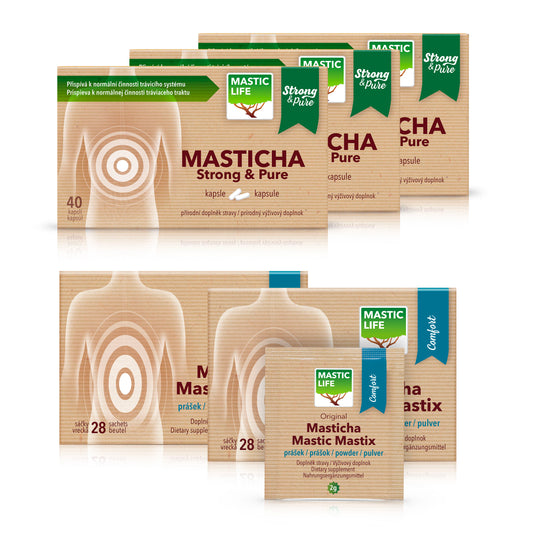 8-week treatment 🗓️
Mastic 8 weeks
Regular price $90.00 USDRegular price$112.00 USDSale price $90.00 USDSale -
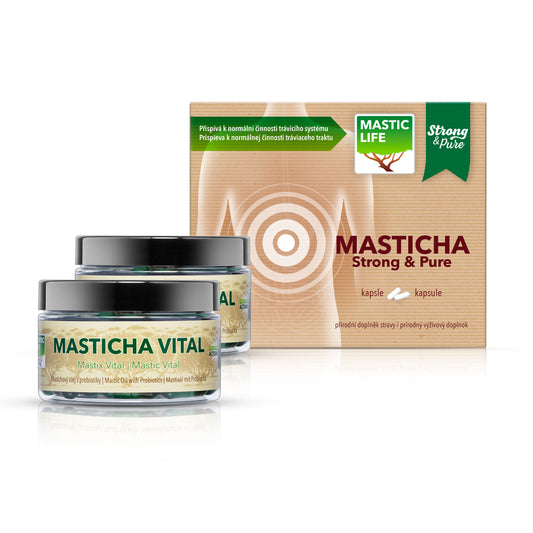 60-day treatment 💪
Mastic Gum Extra for 60 days
Regular price $151.00 USDRegular price$189.00 USDSale price $151.00 USDSale -
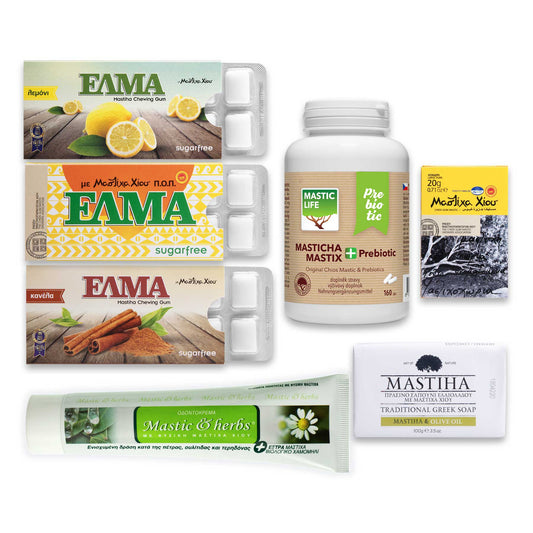 Gift set 🎁
Mastic „Life with Mastic"
Regular price $72.00 USDRegular price$82.00 USDSale price $72.00 USDSale -
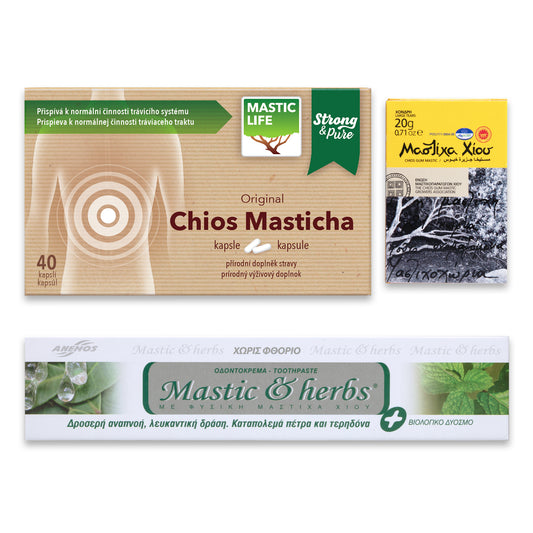 Gift set 🌿
Mastic „Pure Mastic“
Regular price $37.00 USDRegular price$40.00 USDSale price $37.00 USDSale
