
Chios mastic gum inhibits influenza A virus replication and viral pathogenicity
About influenza (flu)
Influenza is a contagious respiratory infection caused by influenza viruses. It is a medical condition; for prevention (such as vaccination) and treatment, see your doctor. The research below is provided for information only.
In short: Chios mastic has a long history of traditional use for digestive complaints. This page summarises a laboratory and animal study that investigated its activity against influenza A virus (IAV).
The study
Chios mastic gum (CMG) is known to influence cellular processes such as cell proliferation, differentiation and apoptosis. Because virus replication depends heavily on the host cell, the researchers reasoned that CMG might affect viral infectivity, and set out to evaluate its activity against influenza A virus (IAV).
In the study, CMG treatment reduced the cytopathogenic effect and the production of viral RNAs, proteins and infectious particles of IAV, appearing to interfere with an early stage of the virus life cycle after viral attachment. In IAV-infected mice, CMG was associated with reduced morbidity and mortality. The authors concluded that CMG showed anti-IAV activity in this model and could be explored as a potential antiviral agent — a research hypothesis that would need much further study before any conclusions for people.

Summary
Historical use
Valued for over 2,500 years, traditionally for digestive complaints.
Antiviral activity (in the study)
In this study, mastic reduced influenza A virus replication and the number of viral particles in vitro.
Mechanism
It appeared to block an early stage of the virus life cycle and reduce cytopathogenic effects in infected cells.
In mice
In IAV-infected mice, mastic was associated with reduced illness and improved survival.
Read the full study in the Journal of General Virology.
Mastic for your gastrointestinal tract
-
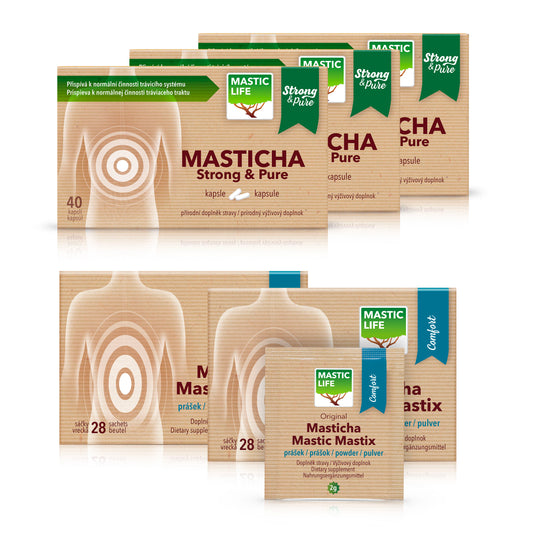 8-week treatment 🗓️
Mastic 8 weeks
Regular price €78.00 EURRegular price€97.50 EURSale price €78.00 EURSale -
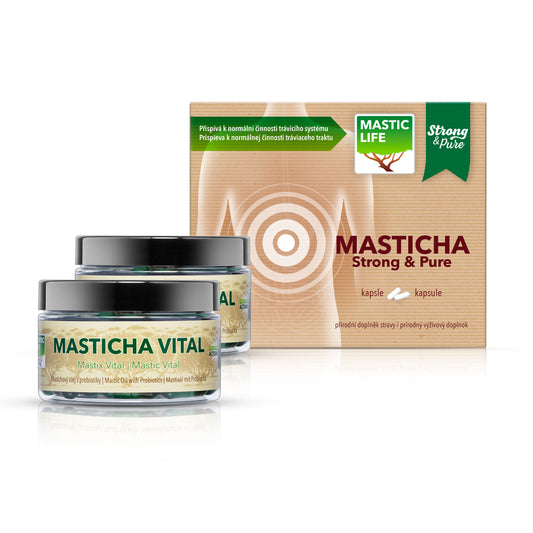 60-day treatment 💪
Mastic Gum Extra for 60 days
Regular price €131.80 EURRegular price€164.70 EURSale price €131.80 EURSale -
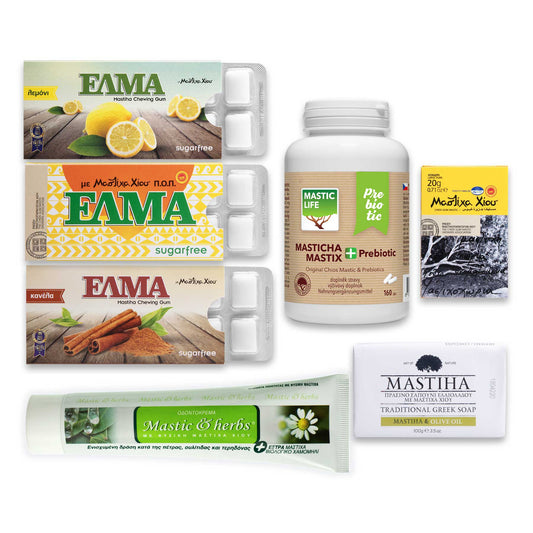 Gift set 🎁
Mastic „Life with Mastic"
Regular price €62.70 EURRegular price€71.30 EURSale price €62.70 EURSale -
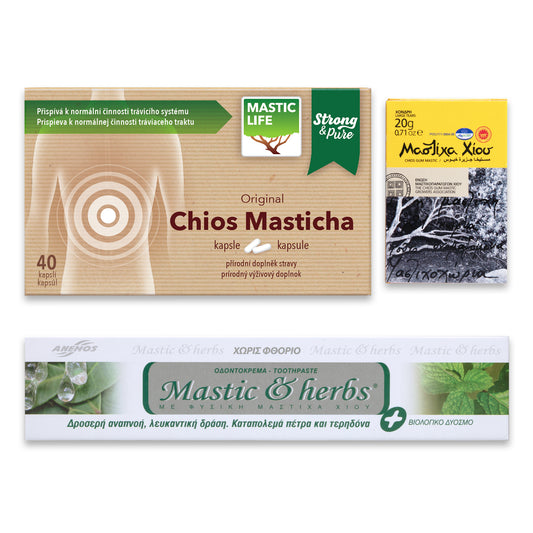 Gift set 🌿
Mastic „Pure Mastic“
Regular price €31.50 EURRegular price€34.20 EURSale price €31.50 EURSale
