
Other Names of Mastic
By Zuzka, mastic specialist at Masticlife · Updated
In short: Mastic gum is the resin of the mastic tree (Pistacia lentiscus). In Greek it is μαστίχα (mastiha). Elsewhere you will see mastix, mastic, gum mastic and “Tears of Chios”. Names in many other languages are listed below.
Names of mastic in 6 points
- In Greek, mastic is called μαστίχα (mastiha). Mastic from Chios is Μαστίχα Χίου.
- The English word “mastic” comes from the Latin mastiche and the Ancient Greek μαστίχη.
- In English it is also called mastic gum, gum mastic and “Tears of Chios”.
- In German it is Mastix, in French mastic, in Italian mastice, in Spanish almáciga and in Turkish damla sakızı.
- In Arabic it is written مصطكى, in Hindi मस्तकी, in Urdu مصطکی and in Chinese 洋乳香.
- Mastic gum is not the same as gond katira, which is tragacanth gum from a different plant.
μαστίχα (mastiha) in Greek
The mastic resin is called μαστίχα (mastiha) in Greek. The word is related to the Ancient Greek μαστίχη and the Latin mastiche, which gave English the word “mastic”. It is thought to be linked to the idea of chewing, as is the English verb “to masticate”. Chewing is also how mastic is known as one of the earliest natural chewing gums.
Other names of mastic gum around the world
- μαστίχα (mastiha): Greek. Chios mastic is Μαστίχα Χίου.
- μαστίχη, mastiche: Ancient Greek and Latin, the source of the English word.
- Mastic, mastic gum, gum mastic: English.
- Tears of Chios: English, a descriptive name for the drops of resin.
- Mastix: German.
- Mastic: French.
- Mastice: Italian.
- Almáciga, mástique: Spanish.
- Màstic: Catalan.
- Masticha: Czech.
- Mastyks: Polish.
- Mastiek: Dutch.
- Мастика: Russian (the resin is “мастика (смола)”).
- Damla sakızı: Turkish (“damla” means drop).
- مصطكى: Arabic, also written مستكة.
- मस्तकी (mastaki): Hindi, of Arabic origin.
- مصطکی (mastaki): Urdu, of Arabic origin.
- 洋乳香 (yáng rǔxiāng): Chinese.
The sources for these names are listed on our sources page.

Frequently asked questions
What is mastic called in Greek?
In Greek, mastic is called μαστίχα (mastiha). Mastic from Chios is called Μαστίχα Χίου.
What is mastiha in English?
Mastiha is the Greek name for mastic or mastic gum, the natural resin of the mastic tree, Pistacia lentiscus.
What are other names for mastic gum?
In English mastic gum is also called mastic, gum mastic and Tears of Chios. In Greek it is mastiha and in German Mastix. Names in more languages are listed on this page.
What is mastic gum called in Hindi and Urdu?
In Hindi it is मस्तकी (mastaki) and in Urdu مصطکی (mastaki). Both words come from Arabic.
What is mastic gum called in Arabic and Turkish?
In Arabic it is written مصطكى, also مستكة. In Turkish it is damla sakızı.
Is mastic gum the same as gond katira?
No. Gond katira is tragacanth gum, which comes from Astragalus plants. Mastic gum is the resin of the mastic tree, Pistacia lentiscus.
Continue reading
Whatever you call it, the real thing comes from Chios. Try authentic mastic tears.
Mastic for your gastrointestinal tract
-
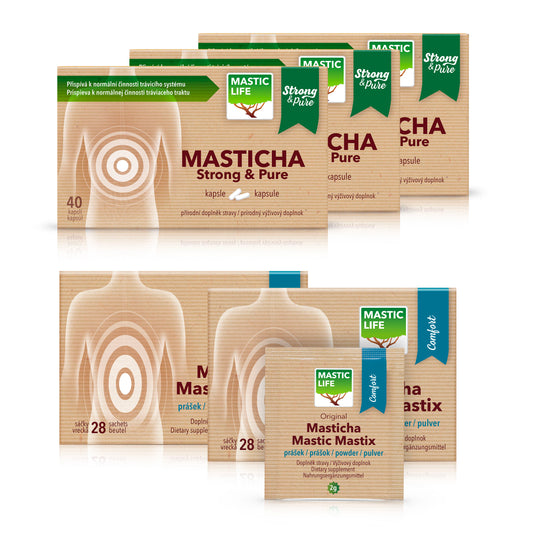 8-week treatment 🗓️
Mastic 8 weeks
Regular price 348,00 PLNRegular price435,00 PLNSale price 348,00 PLNSale -
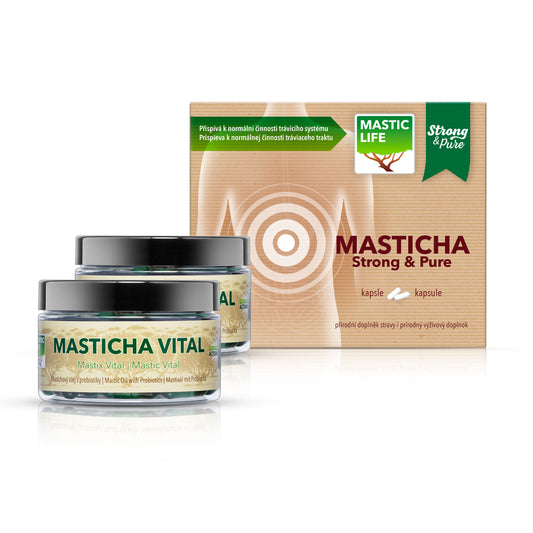 60-day treatment 💪
Mastic Gum Extra for 60 days
Regular price 588,00 PLNRegular price735,00 PLNSale price 588,00 PLNSale -
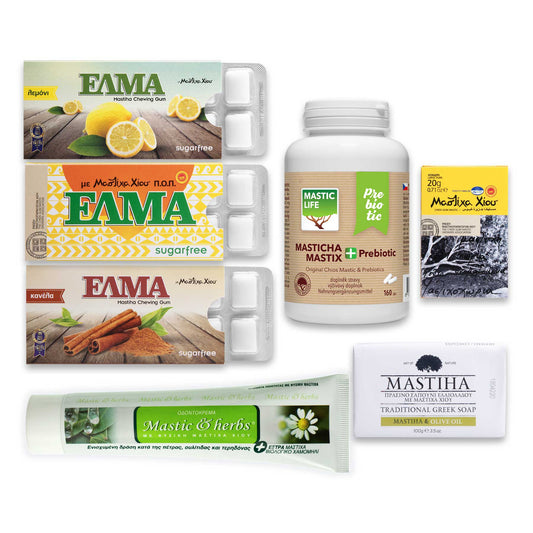 Gift set 🎁
Mastic „Life with Mastic"
Regular price 280,00 PLNRegular price318,00 PLNSale price 280,00 PLNSale -
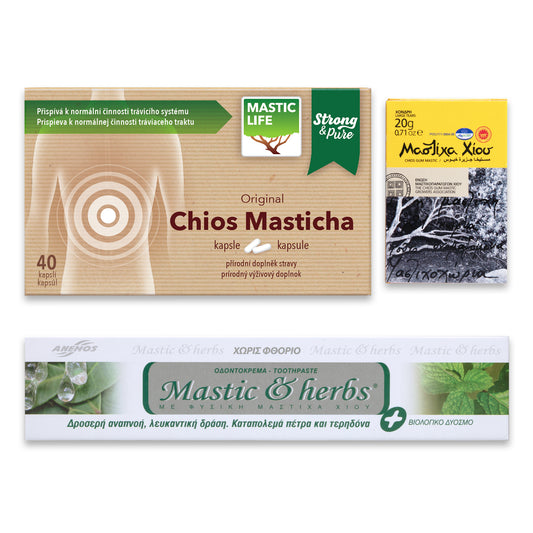 Gift set 🌿
Mastic „Pure Mastic“
Regular price 141,00 PLNRegular price153,00 PLNSale price 141,00 PLNSale
