10 Reasons Why (and How) To Use Chios Mastic Gum
In short: Chios mastic gum is a 100% natural tree resin from the Greek island of Chios, valued for centuries for supporting normal digestion. You can use it as a natural chewing gum, as a dietary supplement (capsules, powder or sachets), or in cosmetics. Below are 10 reasons it keeps growing in popularity — and how to use it.
Mastic gum is the resin of a tree that grows in the Mediterranean, known for centuries for its effects on the digestive system — not only the stomach and oesophagus. Read on for 10 reasons why Chios mastic gum is becoming more and more popular.
In this article
- Mastic gum is a natural substance
- A local phenomenon of Chios
- Free of gluten and other allergens
- Effects proven over centuries
- Modern research
- Mastic gum as 100% organic chewing gum
- Mastic gum as a dietary supplement
- Recommendations for the use of Chios mastic gum
- Mastic gum oil in cosmetics
- Mastic is a superfood
- Summary
10 reasons why Chios mastic gum is getting more and more popular
1. Mastic gum is a natural substance
Mastic gum is the resin of the Pistacia lentiscus tree, which grows on the island of Chios. The resin is obtained from incisions made periodically on the tree trunk. After the mastic drips and falls under the tree onto the prepared ground, the drops of resin are collected and cleaned by hand. The mastic prepared this way is already a finished product for the consumer. Mastic gum is:
- organic — a 100% natural substance,
- not chemically or industrially treated in any way.

2. A local phenomenon of Chios
You won't find the mastic gum known for its beneficial effects on digestion anywhere else. Mastic trees may grow elsewhere in the Mediterranean, but only on the island of Chios does mastic become a miracle drop. This is due to a combination of three factors:
- the soil,
- the climate,
- the variety of Greek mastic tree.
There are different varieties of the Pistacia lentiscus var. Chia tree — you can read more about them here.

3. Free of gluten and other allergens
It also matters to more and more happy mastic users that the resin does not contain gluten or other allergens, which we list here.
If you have an allergy to mastic trees and other Pistacia species, you may also be allergic to the mastic tree.
4. Effects proven over centuries
Hippocrates, the father of medicine, prescribed mastic gum to soothe an upset stomach, while the Roman physician Galen considered it suitable for bronchitis and for improving the blood. Further east, in India and Persia, mastic gum was used to fill tooth cavities.
5. Modern research
Modern research focuses primarily on confirming the historical experience with mastic in the areas of indigestion, stomach upset, abdominal pain, heartburn and reflux (GERD). The largest studies on the effects of mastic gum have looked at:
- stomach ulcers,
- reflux and heartburn,
- H. pylori infection — see also best mastic gum for H. pylori,
- cholesterol.
6. Mastic gum as 100% organic chewing gum
The earliest mention of mastic gum is by Herodotus, who claimed that the Greeks chewed the dried resinous liquid that dripped from the bark of the mastic tree. Mastic was the world's first natural chewing gum, used to clean teeth and freshen breath — and it remains so to this day!
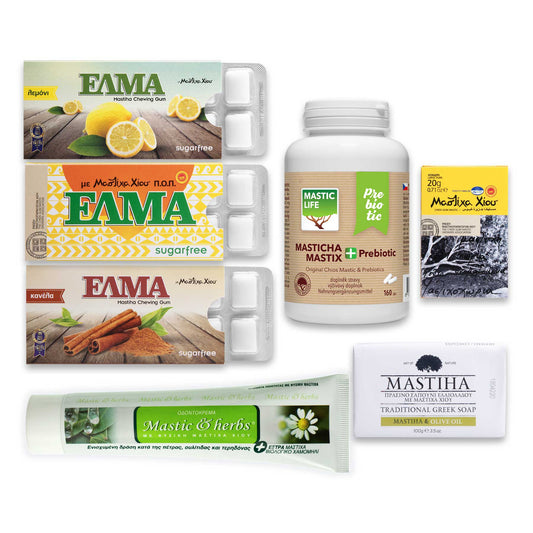
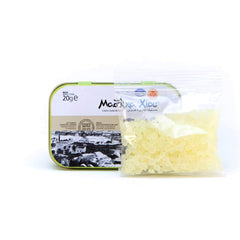
Do you want to chew gum without added sugar and without industrial or chemical modifications? Chew mastic gum. The resin crystals come in several sizes — but with only one flavour: mastic. (New to chewing it? Read why mastic is sometimes soft or hard.)
7. Mastic gum as a dietary supplement
Mastic gum contributes to the normal functioning of the digestive system — this is the phrase that should come to mind when we hear the word mastic, a resin from Greece.
Mastic gum crystals are crushed and ground into a fine powder, which can then be taken in the form of:
- powder,
- capsules,
- sachets.
Mastic is always used when we want to support the normal functioning of our digestion. It acts on the mouth and oesophagus, stomach and intestines. Capsules or sachets are ideal — the rules of use are the same, they differ only in where the mastic starts to work.
8. Recommendations for the use of Chios mastic gum
Follow these simple rules for the best results. For full details, see our guide on the correct dosage of mastic gum.
- Always take mastic (the dietary supplement) on an empty stomach. Ideally 30 minutes before meals, morning and evening.
- The length of use varies depending on your condition. The first results should appear after a few days.
- Mastic gum can also be taken as a preventive measure.
- Never replace medications prescribed by your doctor with mastic gum. If you want to include mastic in your healthy diet, do so after consulting your doctor.
Mastic gum capsules (no other added ingredients)
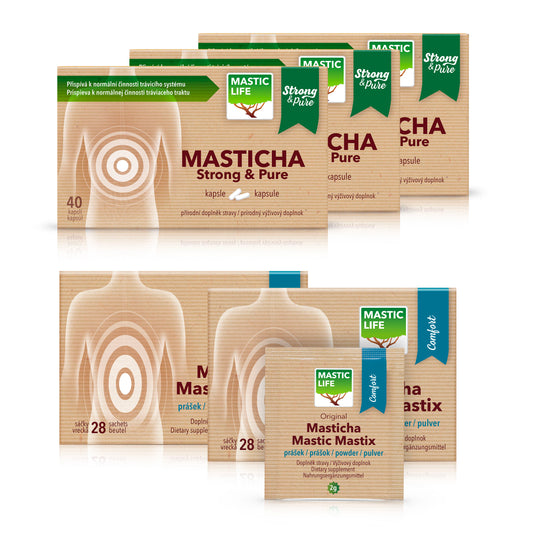
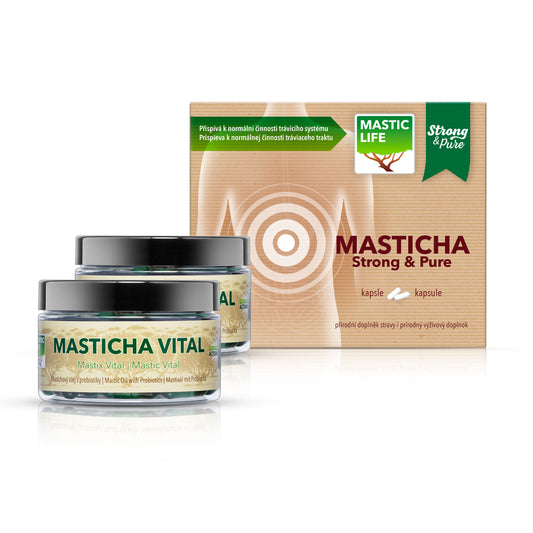
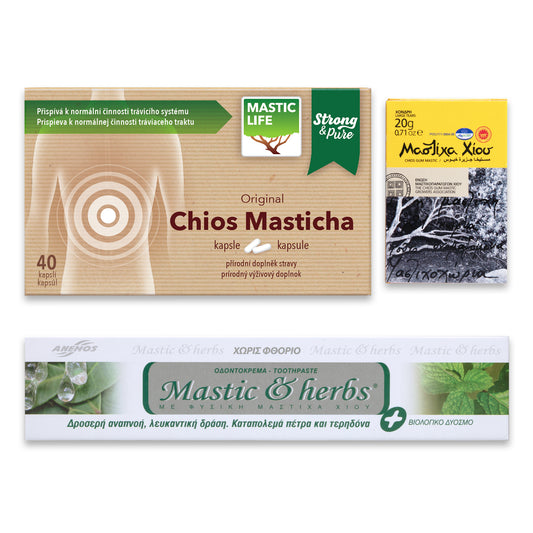
Masticlife Mastic Strong&Pure capsules are filled with mastic gum powder only. The capsule is swallowed whole with water (ideally at room temperature) and works mainly in the stomach — it dissolves about 10 minutes after taking. If you have trouble swallowing capsules, choose mastic sachets instead.

Mastic gum sachets
Masticlife Mastic Comfort sachets are for those who can't swallow capsules. Pour the contents directly into your mouth and wash them down with water. The mastic then works mainly in the mouth, oesophagus and stomach. Again, take the sachets on an empty stomach, 30 minutes before meals. If you'd like to dissolve the contents in a glass of water (room temperature), remember that mastic is a resin — it won't dissolve in water.

9. Mastic gum oil in cosmetics
This natural oil is obtained through a distillation process and is an ingredient in cosmetic products such as creams and soaps. Mastic gum oil is most popular in dental and oral care products, so customers especially like:
- toothpastes with mastic gum oil,
- mouthwashes.
As mastic oil is a natural substance, high demands are placed on the other ingredients in these toothpastes too — often other natural oils, flavours and organic ingredients. Browse our toothpastes with mastic.
10. Mastic is a superfood
Mastic gum from the island of Chios can easily be classified as a superfood thanks to its diverse properties.
Summary
Both mastic gum and mastic gum oil are 100% natural substances, with no added industrial additives or interference. Mastic gum comes from only one place in the world: the Greek island of Chios. The resin is gluten-free. Its effects have been known for thousands of years and are currently being verified by modern scientific research.
Mastic gum can be a chewing gum, a food supplement or a cosmetic ingredient. It is also used as a spice and an ingredient in savoury and sweet dishes, and in recent years it is increasingly referred to as a superfood.
If you want to use mastic gum as a natural dietary supplement contributing to normal digestive function, choose one that suits you in both composition and form — capsules, sachets or crystals.
Continue reading
How to choose your mastic
Apply the "pure substance" rule: pay for the mastic resin, not for the fillers.
Strong&Pure
100% pure mastic powder in capsules. No additives.
Mastic Comfort
Sachets with prebiotic inulin. Works in oesophagus & stomach.
Mastic+ Prebiotic
Capsules combining mastic and chicory inulin.
Rules for successful mastic therapy
- Intensive standard: aim for 1.2–1.6 g of pure mastic daily.
- Duration: courses last 2 weeks to 2 months based on severity.
- Timing: always take on an empty stomach (30 min before food).
- Source: use only PDO Chios mastic for verified effects.
*Always consult your physician. Mastic gum is a natural supplement and does not replace medical treatment.